
Cash Flow Financing for Seasonal Business: 2026 Guide
The largest loan isn’t always the best answer to a seasonal cash gap. The right cash flow financing for seasonal business should cover expenses when they’re due and fit the timing of incoming revenue, so repayments don’t strain the business during its slow months.
If you need to pay for inventory, staffing, or other operating costs before your busy season begins, the pressure is real. Funding that solves the immediate shortfall can create another problem if its payment schedule doesn’t match your cash receipts. Comparing options by headline rate alone can hide that risk.
This guide compares common financing structures for seasonal businesses, including revolving credit, term loans, SBA loans, and invoice financing. You’ll learn how to assess total cost, repayment frequency, qualification criteria, and fit with your revenue cycle. You’ll also see which financial records and forecast details can help explain a predictable seasonal dip and support a credible application and repayment plan.
Key Takeaways
- Separate a predictable seasonal timing gap from an ongoing operating shortfall. Each may call for a different response.
- Compare cash flow financing for seasonal business by structure, qualification criteria, and how repayment fits your revenue cycle.
- Look beyond the stated rate. Review total repayment obligations, fees, payment frequency, and early-payment conditions before accepting an offer.
- Build a seasonal cash-flow forecast using historical sales, current obligations, receivables, and inventory plans.
- Assess providers for transparency and clear communication, then confirm eligibility and review all written terms before moving forward.
Cash flow financing for seasonal businesses: identify the gap first
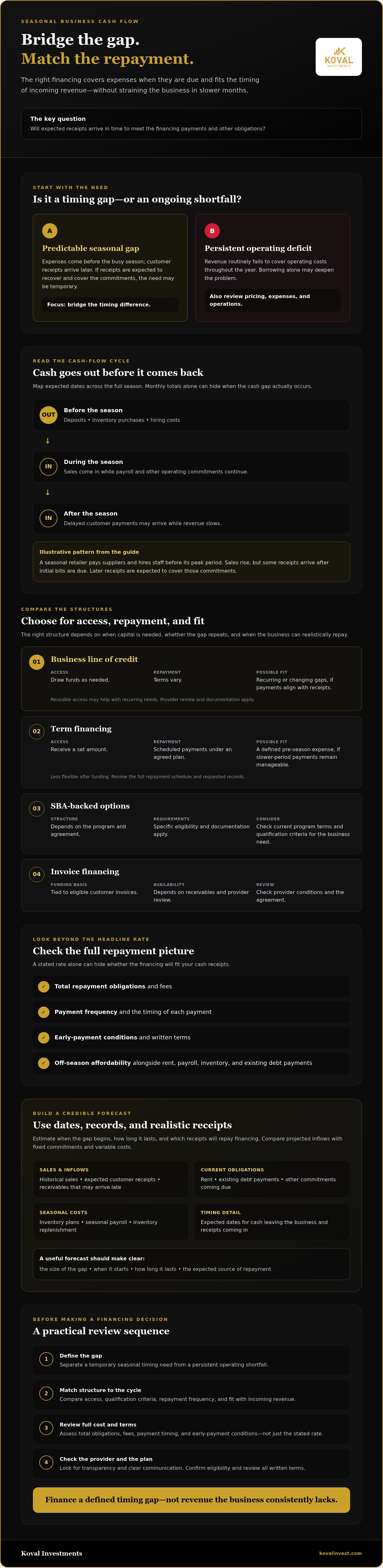
Seasonal cash-flow financing is capital used to cover the timing gap between expenses due before a busy period and customer receipts that arrive later. The need may be temporary, even when the business is sound: inventory purchases, staffing, and other commitments can come before sales. This is a working capital challenge, the difference between resources available for operations and obligations coming due. The working capital concept helps explain why the timing of cash matters as much as projected sales.
Definition: “Seasonal cash-flow financing provides capital to bridge a predictable gap between business expenses and expected customer receipts.”
Before seeking funding, distinguish a recurring seasonal shortfall from a persistent operating deficit. If the same predictable cycle creates a temporary cash need and receipts typically recover, the business may need help managing timing. If revenue routinely fails to cover operating costs throughout the year, borrowing alone may deepen the problem. Review pricing, expenses, and operations alongside any financing decision.
How does a seasonal cash-flow gap develop?
Pre-season inventory orders or hiring can require cash before customers begin buying. A business may receive deposits early, while the remaining customer payments arrive after delivery. Map those events across the full cycle to see when cash leaves the business and when it returns.
Hypothetical example: A seasonal retailer pays suppliers and hires staff before its peak period. Sales then rise, but some customer receipts arrive after initial bills are due. The business faces a temporary timing gap if later receipts are expected to cover those commitments.
- Before the season: Deposits, inventory purchases, and hiring costs.
- During the season: Payroll and other operating commitments continue as sales come in.
- After the season: Delayed customer payments arrive while revenue may slow.
What should an owner calculate before seeking financing?
Build a timeline using expected dates, not just monthly totals. Estimate the gap’s size, when it begins, how long it lasts, and which receipts will repay any financing. Compare projected inflows with fixed commitments, such as rent, and variable costs, such as inventory replenishment or seasonal payroll. Include existing debt payments and receivables that may arrive later than expected.
A simple forecast can show whether the cash need has a clear end point. If receipts won’t cover ongoing commitments after the season, revisit the operating plan before treating financing as the solution. The goal of cash flow financing for seasonal business is to match capital to a defined timing gap and a credible repayment source, not to replace revenue the business consistently lacks.
Compare cash flow financing options for a seasonal business
The right structure depends on when you need capital, how often the gap repeats, and when the business can realistically repay. A revolving line of credit can provide access to funds as needs arise, while term financing provides a set amount with scheduled payments. SBA-backed options and invoice financing may also be worth comparing, depending on your circumstances. For practical context on planning around seasonal income, see this guidance on cash-flow management for seasonal businesses.
| Option | Access and repayment | Flexibility and documentation | Potential seasonal fit |
|---|---|---|---|
| Business line of credit | Draw funds as needed. Repayment terms vary. | Reusable access may help with recurring needs. Provider review and documentation apply. | May suit gaps that recur or change in size, if payments align with receipts. |
| Term financing | Receive a set amount and repay on an agreed schedule. | Less flexible after funding. Review the full repayment schedule and requested records. | May fit a defined pre-season expense if payments remain manageable in slower periods. |
| SBA-backed options | Loan structure and repayment depend on the program and agreement. | Specific eligibility and documentation requirements apply. | Consider for an appropriate business need after checking current program terms and qualification criteria. |
| Invoice financing | Funding is tied to eligible customer invoices and provider conditions. | Availability depends on receivables and the provider’s review and agreement. | May help when unpaid invoices are delaying cash needed for current commitments. |
When might a line of credit or term financing fit?
A line of credit offers revolving access, so you can draw only what you need, subject to the agreement. Term financing provides a defined amount, which may suit a planned purchase with a known cost. For either structure, map each payment date against expected seasonal receipts. Eligibility, fees, and repayment terms vary by provider, so compare written offers instead of assuming the structure determines the cost.
When might SBA or invoice financing merit consideration?
SBA-backed loans have program-specific requirements. Confirm current eligibility, terms, and repayment conditions before applying. For a fuller overview, read this SBA loan assistance guide. Invoice financing depends on qualifying receivables and provider conditions, so check how payment timing and any recourse terms affect your business. Koval Investments helps businesses explore working capital and SBA loans. Review its funding options, including the 2026 guide to 0% interest business funding. Eligibility and terms for any funding option depend on approval and the specific agreement.
Evaluate repayment fit, financing costs, and off-season risk
Financing can deepen a seasonal shortfall if repayments start before customer cash arrives. A payment that looks manageable during peak sales may become a strain when revenue drops or customers pay later than expected. For cash flow financing for seasonal business, repayment timing matters as much as the cost of capital. Even a competitively priced offer can put pressure on cash at the wrong point in the cycle.
Can the business repay during its slow season?
Plot each proposed payment against conservative monthly cash-flow projections, including the off-season. Identify the specific receipts expected to support repayment and when they should arrive. Then test whether the business can still meet essential obligations if customers pay late, peak demand is weaker than forecast, or the selling season is shorter.
Don’t treat forecast sales as guaranteed cash. Build a contingency into the plan by identifying expenses that could be delayed or reduced if receipts fall behind. If the projected schedule works only under the most optimistic sales assumptions, the financing may not fit the business’s risk tolerance.
How should owners compare the full financing obligation?
Review written offers using the same assumptions and compare the total amount to be repaid, not just the stated rate. Check when payments begin, how often they’re due, whether the schedule changes, and whether early repayment affects the amount owed. Confirm all fees and other charges in the offer documents.
- Payment mechanics: Compare payment frequency and dates with expected cash receipts.
- Security and recourse: Check whether collateral or a personal guarantee is required, and understand the obligations involved.
- Default terms: Review what the agreement defines as default and what consequences it specifies.
- Early payment: Confirm whether paying ahead changes fees, interest, or the total repayment obligation.
Use a consistent comparison: assess each offer against the same projected inflows, operating commitments, and slower-season assumptions. Ask the provider to explain unclear terms in writing. If you’re unsure about the meaning or consequences of agreement language, consider review by a qualified financial or legal professional before accepting.
The strongest option isn’t necessarily the one with the lowest stated rate. It’s the one whose complete payment obligations remain manageable under realistic conditions, including delayed receipts or a softer season. If the repayment plan leaves no room for ordinary operating costs during the downturn, revisit the amount, structure, or timing before proceeding.
Prepare a seasonal financing application and cash-flow forecast
A well-organized application connects the amount requested to a defined business need and a realistic repayment plan. For cash flow financing for seasonal business, show how the revenue cycle works, when the cash gap occurs, and how the proposed funding fits the business’s obligations. Providers may request different documents and assess applications differently, so confirm each provider’s requirements before submitting.
Prepare in a clear sequence: forecast cash flow, document the timing and purpose of the gap, compare written offers, then test each proposed payment against your repayment capacity. This keeps the funding request tied to operating realities rather than a round estimate.
Which records help explain a seasonal funding need?
Organize records that show both the seasonal pattern and your current financial position. Depending on the provider, useful documents may include recent bank statements, financial statements, tax returns, receivables information, and prior-period sales and expenses. Some lenders may request two years of tax returns, but requirements vary, so check the application list.
- Group sales and expenses by comparable periods to show recurring seasonal patterns where records are available.
- List current obligations, outstanding receivables, and inventory or hiring plans related to the funding request.
- Connect the requested amount to specific planned uses, such as inventory purchases or seasonal operating costs.
Keep figures consistent across documents and explain unusual changes, such as a late customer payment or a shift in supplier timing. A clear record of how funds will be used makes it easier to assess whether the request addresses a temporary cash need.
How can a forecast make the funding decision clearer?
Lay out expected cash inflows, fixed costs, variable expenses, and proposed financing payments by period. A monthly view can be useful, but use shorter periods if major receipts and bills fall close together. Include existing obligations so the forecast reflects the full demands on available cash.
Prepare a base case and a downside case. The base case can use your best-supported expectations. The downside case can test lower demand, slower collections, or delayed supplier delivery. Label assumptions clearly. Projections help assess possible outcomes, but they aren’t promises of future sales or receipts.
Mark which assumptions depend on customer demand, inventory arriving on time, or invoices being paid as expected. Then check whether the business can manage proposed payments if those events shift. For broader context on how working capital supports business needs, see this working capital funding guide.
To explore funding, review Koval Investments’ capital options. Eligibility, approval, and specific terms depend on the applicable program and provider.
Choose a seasonal business financing partner and define next steps
A suitable financing partner should make the terms understandable and explain how the process works. For cash flow financing for seasonal business, look for a provider that can discuss repayment timing in relation to your revenue cycle, answer questions directly, and supply complete written terms. Compare the provider as carefully as the financing structure.
Use this checklist before moving forward:
- Transparency: Are fees, repayment obligations, and conditions explained clearly?
- Fit: Does the payment structure match your seasonal receipts and off-season capacity?
- Process: Are eligibility requirements, requested documents, and decision steps clear?
- Communication: Can you get straightforward answers about unfamiliar terms or changes?
- Written terms: Have you received and reviewed the complete agreement before accepting?
What questions should owners ask a financing provider?
Ask which eligibility criteria apply, which documents the provider needs, and how repayment is triggered. Confirm whether payments are fixed, variable, revolving, or linked to receivables, and ask about fees, payment frequency, and the decision process. Request all terms in writing. If a provision is unclear, ask for an explanation before signing rather than relying on a verbal summary.
When could Koval Investments be relevant?
Koval Investments helps businesses explore capital procurement options, including working capital and SBA loans. The firm also offers a 0% Interest Funding Solution, but eligibility, approval, availability, and terms depend on the specific program and applicant. Confirm current qualification criteria and repayment details rather than assuming a particular option will be available or suitable.
Before accepting financing, check that you understand the full repayment obligation and can support it under realistic seasonal conditions. If agreement language raises questions, consider seeking qualified financial or legal review. A careful comparison can help you decide whether a provider’s option fits the need, not simply whether funding is offered.
To discuss your business funding needs and explore available options, contact Koval Investments.
Plan your next season with a funding strategy that fits
Seasonal financing works best when it addresses a defined timing gap and repayment fits the business’s revenue cycle. Before choosing an option, compare the full written obligations, test payments against conservative cash-flow projections, and prepare records that explain the need and intended use of funds. A careful plan can help you weigh cash flow financing for seasonal business without overlooking off-season risk.
Koval Investments helps businesses explore capital procurement options, including working capital and SBA loans. The firm also offers a 0% Interest Funding Solution, subject to current eligibility, approval, and program terms. No option is right for every business, so confirm the requirements and repayment details that apply to your circumstances.
A clear forecast and thoughtful comparison can help you prepare for the season ahead. Discuss your seasonal business funding needs with Koval Investments.
Frequently Asked Questions
What is cash flow financing for a seasonal business?
Cash flow financing for a seasonal business is capital used to bridge the timing gap between expenses and expected customer receipts. A business might need to pay for inventory or seasonal staffing before sales revenue arrives. The key is to identify a temporary, predictable gap and the receipts expected to repay the financing. If revenue consistently falls short of operating costs, borrowing may not address the underlying problem.
Is a business line of credit a good option for a seasonal business?
A business line of credit may suit a seasonal company with recurring cash needs that vary from one period to another. It generally provides access to funds up to an agreed limit, with repayment governed by the provider’s terms. Before applying, compare payment dates with expected receipts, including during the slow season. Eligibility, fees, access conditions, and repayment schedules vary, so review each written offer carefully.
Can a seasonal business qualify for an SBA loan?
A seasonal business may apply for an SBA loan, but seasonality alone doesn’t establish eligibility or guarantee approval. Qualification depends on applicable program requirements and the business’s financial capacity, credit profile, and supporting documentation. Prepare records that explain the revenue cycle and show how the business expects to repay. Confirm current eligibility criteria, terms, and documentation requirements with the relevant provider before relying on a particular SBA option.
How much cash flow financing does a seasonal business need?
Estimate the amount by forecasting when cash leaves the business, when receipts are expected, and how much of the gap existing cash can cover. Include planned inventory, payroll, fixed bills, variable expenses, and current debt obligations. Request funding tied to documented uses rather than a broad estimate. Then test repayment against a conservative forecast, including slower collections or weaker seasonal sales, so the proposed amount doesn’t create avoidable off-season pressure.
What happens if a seasonal business cannot repay during the off-season?
If repayment becomes difficult, the consequences depend on the agreement, including its default provisions, collateral terms, and any guarantees. Review these conditions before accepting financing, not after a shortfall occurs. If cash receipts are delayed, contact the provider promptly to understand what options, if any, the agreement allows. Don’t assume payments can be paused or changed. Consider qualified financial or legal advice if the terms or potential consequences are unclear.
Is 0% interest funding available for seasonal businesses?
Some seasonal businesses may be able to explore 0% interest funding, but availability and qualification aren’t guaranteed. Koval Investments offers a 0% Interest Funding Solution, subject to eligibility, approval, current program terms, and availability. Confirm how repayment works and whether fees or other conditions apply before deciding. Compare the complete written obligations with other options, and check that the payment schedule fits your forecast, including the off-season.
Which documents should I prepare when applying for seasonal business financing?
Prepare the records the provider requests. These may include financial statements, bank statements, tax documents, accounts receivable details, current obligations, and inventory or staffing plans. Prior-period sales and expense records can help demonstrate recurring seasonality. Include a cash-flow forecast showing expected inflows, operating costs, the requested amount, and proposed repayment. Requirements differ by provider, so confirm the document list and make sure figures are consistent across submissions.
Ready to explore funding for your seasonal cash-flow needs? Discuss your options with Koval Investments.