
SBA Loans for Startups in 2026: Compare Funding Options and Prepare to Apply
The right startup financing depends on what you need to fund, how you expect to repay it, and what evidence your business can provide. SBA loans for startups may be an option even when revenue history is limited, but approval isn’t automatic. Lenders still need a clear explanation of how you’ll use the funds and repay the debt.
If your business is new, it’s reasonable to wonder whether you can qualify while your credit history and financial records are still taking shape. In 2026, SBA 7(a) small-loan applications require full manual underwriting, so a well-supported plan and organized documentation matter. Individual lenders may also set their own standards.
This guide explains what lenders may assess in a startup application and how to compare an SBA 7(a), Microloan, or 504 loan with equipment-focused options. You’ll learn which records to prepare before speaking with a lender and how to match the funding option to your need. The goal is to help you approach that conversation with a clearer view of your choices, readiness, and the questions worth asking.
Key Takeaways
- SBA loans for startups may be possible without years of revenue, but lenders still assess the full application and repayment plan.
- Match the funding purpose to the program: 7(a) offers flexibility, 504 targets eligible fixed assets, and microloans address smaller funding needs.
- Equipment financing may suit a specific purchase, while SBA-backed options can differ in eligible uses, collateral, repayment, and application scope.
- Organize your funding request, projections, credit information, and business records before speaking with lenders, then confirm their specific requirements.
- Compare options based on the asset, repayment plan, and evidence your startup can provide, rather than choosing by loan name alone.
SBA Loans for Startups: What They Fund and How the Process Works
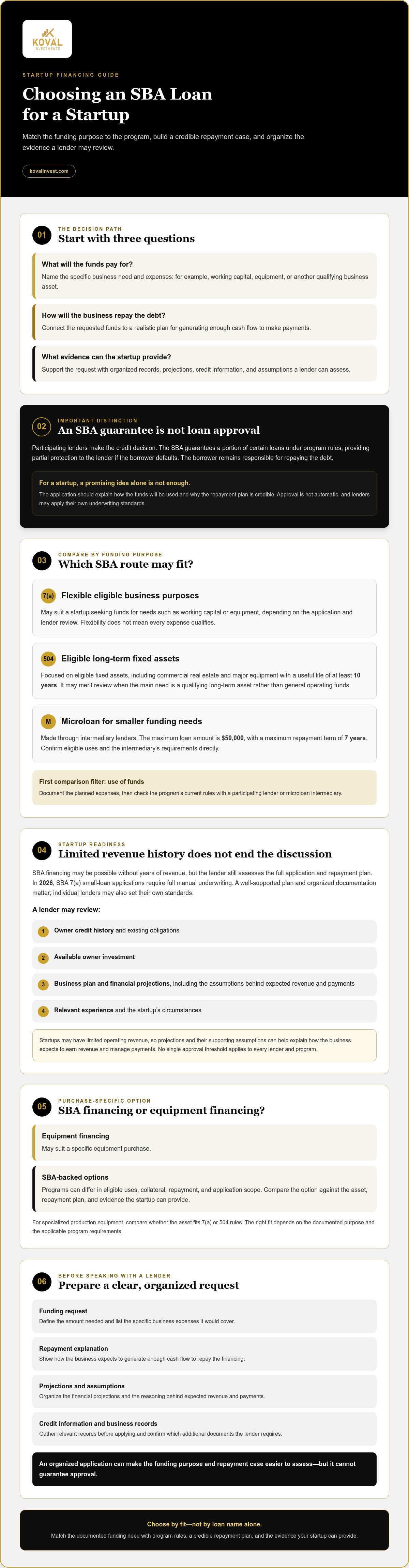
SBA loans for startups are made by participating lenders, such as banks and other approved financing institutions. The U.S. Small Business Administration (SBA) guarantees a portion of certain loans, subject to program rules. The Small Business Administration generally doesn’t lend directly to small businesses through its standard loan programs. Instead, a lender reviews the application and makes the credit decision. The SBA guarantee provides the lender with partial protection if the borrower defaults, but the borrower remains responsible for repaying the debt.
That distinction matters: an SBA guarantee doesn’t guarantee approval for the borrower. A lender considers the applicable program requirements, its own underwriting standards, the business’s circumstances, and whether the repayment plan is credible. For a startup, the application needs to show more than a promising idea. It should connect a specific business need to a realistic plan for generating enough cash flow to repay the financing.
What can startup SBA financing potentially support?
Eligible uses depend on the loan program and the lender’s review. Financing may support business needs such as working capital, equipment, or other qualifying business assets. For example, a startup might seek funds for a commercial oven needed to open a bakery. Whether that purchase fits a particular SBA program depends on its current permitted uses and the complete application.
Keep the purpose specific and business-related. Funds for launching or operating a business are different from money for household bills or personal purchases, which shouldn’t be presented as business expenses. Buying an established business is also a distinct purpose. It may be financeable under applicable rules, but the application involves evaluating the purchase and the business being acquired, rather than funding a new venture’s initial needs.
Why does a lender assess more than the business idea?
Lenders need evidence that the business can use the funds as proposed and repay the loan. Depending on the program and lender, they may review the owner’s credit history, available owner investment, business plan, financial projections, existing obligations, and relevant experience. A startup may not have years of operating revenue, so projections and supporting assumptions can help explain how the business expects to earn revenue and manage payments. No single approval threshold applies to every lender and program.
Before applying, define the amount you need, list the specific business expenses it would cover, and prepare a clear explanation of expected repayment. Lenders may request additional records or use different evaluation criteria, so confirm their requirements early. An organized application can make the funding purpose and repayment case easier to assess, but it can’t guarantee approval.
Which SBA Loan Programs May Fit a Startup’s Funding Purpose?
Start with what the business will buy or fund. The SBA’s SBA loan programs page outlines current pathways, each with distinct permitted uses and structures. Document your planned expenses, then check current rules with a participating lender or microloan intermediary before choosing a route.
When might a 7(a), 504, or microloan route merit review?
7(a): This is the most flexible of these options for eligible business purposes. Depending on the application and lender review, it may suit a startup seeking funds for needs such as working capital or equipment. Flexibility doesn’t mean every expense qualifies.
504: This program focuses on eligible fixed assets, including commercial real estate and major equipment with a useful life of at least 10 years. It may be worth reviewing when a startup’s main need is a qualifying long-term asset rather than general operating funds.
Microloan: SBA microloans are made through intermediary lenders. The maximum loan amount is $50,000, with a maximum repayment term of seven years. They may support smaller business needs, but confirm the intermediary’s requirements and the specific eligible uses directly.
For example, a startup buying specialized production equipment can compare the asset’s eligibility under 7(a) and 504. A smaller request for eligible operating needs may be a reason to ask an intermediary about a microloan. Use the funding purpose as your first comparison filter: the best-fit program is the one whose rules align with the documented use of funds.
What should founders compare before choosing a program?
Look beyond the maximum loan amount. Compare the uses each program permits, how repayment would fit projected cash flow, what collateral may be considered, what records the application requires, and whether a participating lender or intermediary can assess your situation. Terms and underwriting standards differ, so don’t assume one lender’s conditions apply across the board.
Separate fixed-asset costs from working capital in your budget. This breakdown helps a lender assess whether one program fits or whether the proposed uses need a different structure. For a closer side-by-side discussion, see this SBA 7(a) vs. 504 loan guidance.
Founders weighing SBA loans for startups can also discuss how their funding purpose and financial readiness align with available options with a potential capital guide such as Koval Investments. Confirm the firm’s current role and scope, and verify program details with the lender or intermediary before applying.
Can a Startup Qualify for an SBA Loan Without Years of Revenue?
A short operating history doesn’t automatically rule out a startup, but it can make a lender’s assessment more challenging. With limited revenue records, the application needs other credible evidence that the business can use the funds productively and repay the debt. Approval depends on the full application, current program requirements, and the lender’s underwriting standards. No single factor guarantees a result.
Keep the parts of your financial profile distinct. A lender may review the owners’ personal credit history, any available business credit, the owners’ investment in the venture, potential collateral, and evidence supporting future cash flow. These factors serve different purposes. For example, collateral may help secure a loan, but it doesn’t replace a convincing repayment plan.
What evidence can a pre-revenue founder prepare?
Build a clear business plan and detailed use-of-funds breakdown. Pair them with financial projections showing expected revenue, operating costs, and loan payments. Label projections as estimates and explain the assumptions behind them, such as planned prices, customer volume, or opening date. For eligible uses under the SBA 7(a) loans program, the SBA identifies working capital and equipment among possible purposes, subject to program rules and lender review.
Support your assumptions where possible. Relevant founder experience, customer interest, signed contracts, and supplier quotes can help explain the plan, but none guarantees approval. Be clear about what is confirmed and what remains an estimate.
How do credit and repayment capacity affect the review?
Lenders may assess owners’ credit alongside the business’s expected ability to make payments. Before applying, review the relevant credit reports for inaccurate information and gather records that help explain your financial position. Don’t assume a particular score or amount of collateral will secure approval; criteria vary by lender and program.
Koval Investments offers credit report review and disputes of identified inaccuracies as a separate support service. Credit optimization may help you address your financial profile, but it doesn’t ensure loan approval. For broader process context, read this SBA loan assistance guidance. Before applying, confirm current requirements with the lender and consider whether professional guidance would help you compare options and prepare your application.
SBA Loans vs. Equipment Financing for Startup Purchases
If your startup is buying a specific asset, compare financing based on what the funds can cover and the repayment obligations that follow. SBA-backed financing may support different eligible business purposes depending on the program. Equipment financing is a broad category of products, not one standardized loan with universal terms or approval rules. The provider’s offer determines details such as eligible assets, collateral, down payment, guarantees, and repayment schedule.
| Comparison point | SBA-backed financing | Equipment financing |
|---|---|---|
| Funding purpose | May cover one or more eligible business expenses, depending on the program. | Generally tied to an identified equipment purchase; eligible assets vary by provider. |
| Collateral | Collateral requirements depend on the program, lender, and application. | The equipment may secure the financing, but the provider sets the terms and may require other support. |
| Application scope | May require a broader review of the business and its financial position. | Typically centers on the equipment purchase and the applicant’s ability to repay, with criteria varying by provider. |
| Repayment | Review the lender’s proposed schedule and obligations for the specific program. | Review the provider’s offer, including payment schedule and what happens if payments are missed. |
When could equipment financing better match the purchase?
Consider an asset-focused option when you’ve identified the equipment, confirmed its cost, and can explain how it will support operations and repayment. For example, production equipment that enables the business to fulfill customer orders gives the lender a specific purchase to evaluate. Ask whether the asset is central to your business plan, and verify all terms with the provider. Down payment, liens, personal guarantees, and eligible equipment vary.
When might broader SBA financing deserve comparison?
If your startup needs funds for several eligible business costs, compare the total scope of an SBA option with equipment financing. A 7(a) loan may support a range of eligible purposes; a 504 loan can finance qualifying fixed assets, including major equipment with a useful life of at least 10 years. Neither program automatically covers every expense. Request lender-provided terms and compare the full repayment obligations, documentation, and collateral expectations before choosing.
Keep the decision proportional to the need. If one asset is the main requirement, weigh whether a broader application is justified. If several costs must be funded, check whether an asset-specific product leaves a gap. You can also review 0% interest business funding options as a separate comparison, not an assumed substitute. To discuss which capital options may align with your startup’s needs, compare your funding options with Koval Investments.
How to Prepare for a Startup SBA Loan Application
A focused preparation process helps you explain the funding need, support your repayment case, and identify what remains uncertain before a lender reviews the application. Treat this checklist as a starting point. Specific documents and eligibility requirements vary by program and lender, so confirm them directly before submitting sensitive information.
What records and planning materials should founders organize?
Work through these steps before discussing SBA loans for startups with lenders:
- Define the funding need. State the amount requested and itemize the business expenses it would cover. Separate equipment costs from working capital or other intended uses.
- Build the repayment case. Prepare a business plan and projections explaining revenue assumptions, operating costs, and how the business expects to make payments. Distinguish estimates from actual results.
- Gather supporting records. Organize formation and ownership documents, available business financial statements, and relevant personal financial information. Add credit reports and equipment quotes or specifications if requested.
- Check the program fit. Confirm which SBA program may align with the proposed use, the current eligibility rules, and the lender’s document checklist. Note missing records rather than guessing.
- Discuss options with lenders. Bring your funding breakdown and questions to the conversation. Ask what additional information would help assess the application.
Keep documents current and consistent across your plan, projections, and supporting records. Protect personal and financial data by sharing it only through appropriate channels you’ve verified with the lender or intermediary.
What questions should founders ask lenders or an advisor?
Use the discussion to understand the offer and your responsibilities, not just whether an application can move forward. Ask:
- Which SBA program appears to fit the documented use of funds, and what eligibility requirements should I confirm?
- Which records are still outstanding, and who is responsible for preparing or submitting each item?
- How are repayment, collateral, personal guarantees, and any applicable fees structured in the proposed terms?
- What assumptions or parts of my repayment plan need stronger support?
Review written terms carefully and compare the full obligations before deciding. A capital procurement advisor may help you organize questions and compare options, but the lender makes its own assessment. Koval Investments lists SBA loans and capital procurement among its services. To discuss whether your funding need and readiness merit professional guidance, discuss your startup funding options with Koval Investments.
Take the Next Step Toward Funding Readiness
The strongest financing choice starts with a clear purpose. Match the funds to the right program or equipment option, then weigh repayment obligations against a realistic view of your startup’s cash flow. A limited revenue history doesn’t automatically end the conversation, but organized records and defensible projections can help lenders assess the full application.
Before approaching lenders, define your funding need, assemble supporting documents, and prepare questions about program fit, collateral, guarantees, fees, and repayment. SBA loans for startups may be worth exploring, but approval depends on lender review and applicable program requirements.
Koval Investments offers capital procurement and funding support, including SBA loans, alongside credit report review and credit optimization services. These services can help you prepare and compare options, but they don’t guarantee loan approval. If you’re ready to discuss your funding needs and next steps, discuss your startup funding options with Koval Investments.
Frequently Asked Questions
Can a startup get an SBA loan with no revenue?
Yes, a startup may apply without established revenue, but approval isn’t assured. Lenders may have less operating history to assess, so they’ll look closely at the complete application and repayment case. Prepare realistic projections, explain the assumptions behind them, and provide supporting evidence such as founder experience, customer commitments, or supplier quotes where relevant. Program rules and lender standards vary, so confirm requirements before applying.
What SBA loan is best for a startup buying equipment?
The right program depends on the equipment and the startup’s other funding needs. A 504 loan may merit review for major equipment with a useful life of at least 10 years. A 7(a) loan can support eligible equipment purchases and may offer broader use of funds. Compare program eligibility, lender terms, collateral expectations, and repayment plans before choosing. The purchase itself doesn’t guarantee eligibility or approval.
Can an SBA loan be used to buy equipment?
Yes, eligible SBA-backed financing may be used for business equipment, subject to program rules and lender approval. For example, equipment could be central to a startup’s production or service operations. The 504 program is designed for eligible fixed assets, including major equipment with a useful life of at least 10 years; 7(a) may cover eligible equipment purchases as part of broader business financing. Confirm the proposed use with a lender.
How much can a startup borrow through an SBA loan?
There isn’t one startup-specific borrowing limit. The maximum depends on the program: SBA 7(a) loans can be up to $5 million, while SBA microloans are capped at $50,000. A 504 loan amount depends on project eligibility and applicable program limits. These are maximums, not promises of funding. Lenders assess the business’s financing need, repayment case, eligibility, and documentation when deciding whether to approve a request and for what amount.
Do SBA startup loans require collateral or a personal guarantee?
Collateral and guarantee requirements depend on the loan program, lender, and application. Startups should be prepared for lenders to assess available business assets, and significant owners may be asked for personal guarantees. Ask the lender which owners must guarantee repayment, what collateral may secure the loan, and whether any collateral gaps affect the application. A guarantee is a repayment obligation, so confirm the proposed terms in writing.
Is equipment financing easier to get than an SBA loan for a startup?
Not necessarily. Equipment financing often focuses on a specific asset, while an SBA application may cover broader eligible business needs. But equipment financing is a category of products, and providers set different eligibility and underwriting standards. Compare written offers, including down payment, collateral, guarantees, repayment, and fees. A narrower application scope doesn’t guarantee faster approval or make qualification easier, especially for a startup with limited financial history.
How long does it take to get an SBA startup loan?
There’s no single timeline that applies to every SBA startup loan. Processing can depend on the program, lender, application complexity, and how quickly you provide complete documentation. Ask the lender for its current estimated steps and timing, including underwriting, SBA review if applicable, and closing. To help avoid preventable delays, submit organized, consistent records and respond promptly to requests. Treat any estimate as lender-specific, not a guaranteed funding date.